Rehabilitation of Aging Infrastructure
Overview
Rehabilitation of Aging Infrastructure
In the industrialized countries, the 1970s were characterized by a burgeoning economy, expanding mobility, a rise in traffic, growing energy demand and significantly increased water usage. This went hand in hand with extensive investments in infrastructure facilities, especially motorways and railway lines including bridges and tunnels, in hydropower plants, water supply systems, and wastewater disposal and treatment plants. Such structures were designed for a service life of 60 to 80 years. The respective facilities were planned and constructed according to the knowledge at the time and the predicted social development and expected long-term material behavior.
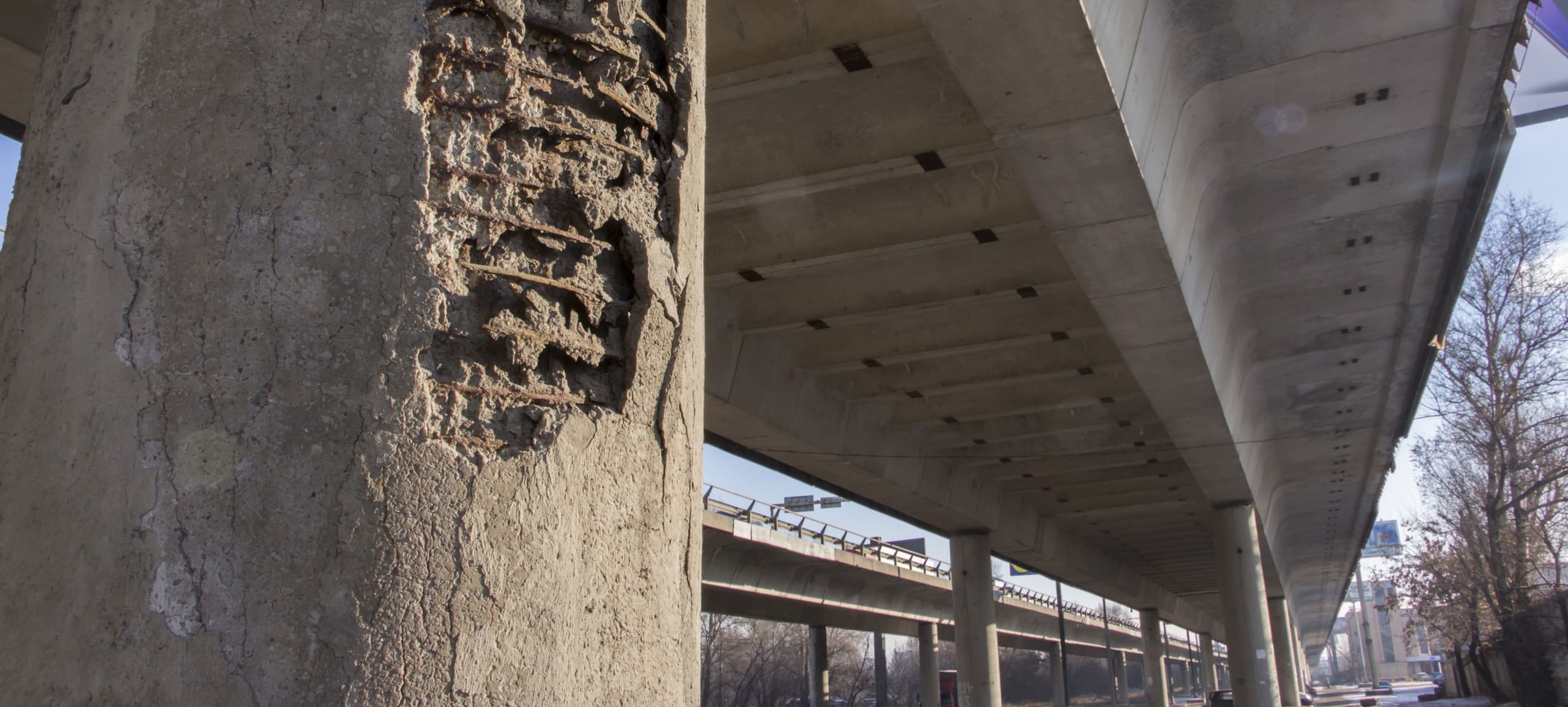
To date, the existing structures have largely accomplished their intended purpose and continue to be essential components of the current infrastructure. Compared to the assumptions made when the structures were planned and built, great changes have taken place since then. Disproportionate and unpredictable impacts – resulting on the one hand from the enormous traffic volume, and on the other hand from increased spreading of salt on roads in winter to meet more stringent road safety requirements – have become evident in all traffic facilities. In wastewater disposal, significantly larger amounts and changed composition of municipal and industrial wastewater have been observed. In addition, there are new requirements from standards concerning load cases, verification of load-bearing capacity and consolidated knowledge on the topic of durability and fatigue behavior of construction materials.
All these aspects require early and extensive rehabilitation of existing infrastructure facilities to make them fit for current and future demands.
Role of ILF
ILF provides consulting services to clients, from initial considerations on the evaluation of the actual condition of structures, definition of current and future requirements, planning of measures, and even construction. A comprehensive approach is adopted taking into account not only technical aspects but also economic efficiency and sustainability with regard to the life cycle of structures.
Benefits to Clients
The rehabilitation of aging infrastructure facilities generally involves different technical disciplines. Besides solutions for the rehabilitation (material), ILF can also provide complementary geological, geotechnical and environmental expertise among others. Backed by in-house professionals, ILF offers a complete package of services so that clients receive customized solutions and do not have to keep an eye on interfaces.
What We Deliver
ILF offers the following services in the field of Rehabilitation of Aging Infrastructure:
- Evaluating structures based on existing documents from the design phase, by means of testing (e.g. compressive strength) and sampling (e.g. chemical analysis of concrete), measuring concrete cover and localizing reinforcement to determine any residual load-bearing capacities
- Defining current and future demands on structures
- Comparing current conditions with defined requirements
- Planning measures for the rehabilitation of structures while in operation, or planning complementary or new structures while largely keeping the existing structures operational
- Performing life cycle cost analyses (comparing costs of rehabilitation and new construction)
Related Additional Services
Explore Related Expertise
Explore specialized services that complement this expertise across every stage of project delivery.