Resilience Management of Critical Infrastructure
Overview
Resilience Management of Critical Infrastructure
The physical, information and operational security of transportation infrastructure, industrial facilities and other types of infrastructure is subject to a wide range of threats. These range from typical natural hazards, which are sometimes dramatically altered by the effects of climate change, to slow-onset defects, technical faults and accidents, as well as to targeted attacks such as cybercrime. Such sophisticated attacks often bypass traditional security measures and have the potential to disrupt operations or production, cause spills or product contamination, destroy structures or process equipment, or even endanger human life. Isolated technological, administrative or organizational measures cannot stop such attacks. Instead, a holistic approach to resilience management focuses on keeping the infrastructure or facility safely available as much as possible by preventing its exposure to disruptive events, limiting the effects of such events, and/or recovering quickly from them – as well as adapting appropriately to changing circumstances that could adversely affect availability.
ILF’s Role
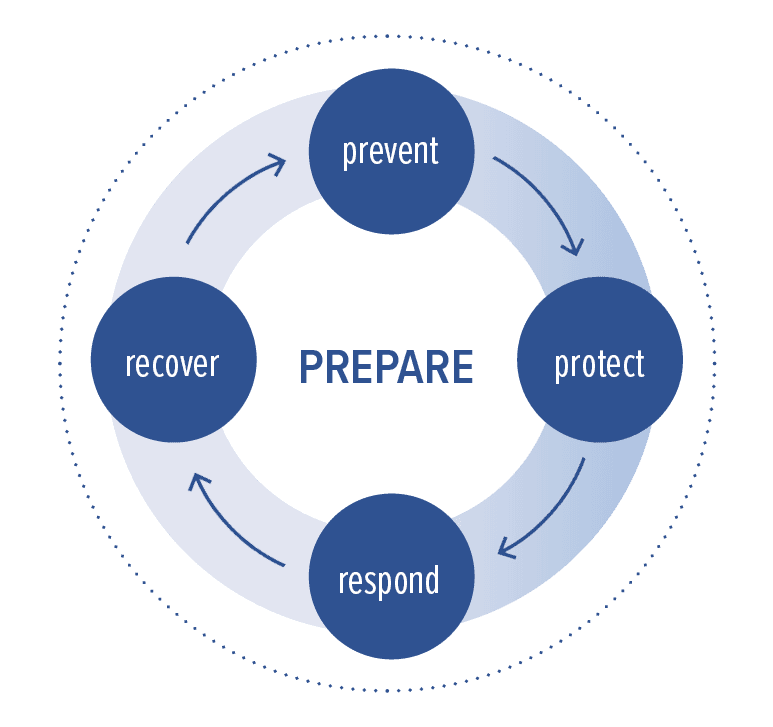
A continuous resilience management process is the best way to prevent disruptive events, mitigate their effects and quickly restore normal operations. ILF’s comprehensive approach covers the entire project life cycle and all aspects of a resilience management system, including physical security, robust design and cyber security.
Benefits to Clients
Based on its experience over the last five decades, ILF is in the position to support the development of an appropriate protection system for different types of critical infrastructure. The earlier resilience measures are considered in a project, the better synergy effects between resilience and other project requirements can be taken into account, thus enhancing cost-effectiveness. Taking an interdisciplinary approach, ILF can offer tailor-made, robust and balanced solutions that address both security needs and operational requirements.
What We Deliver
ILF offers the following services in the field of critical infrastructure protection:
- System analysis/audit, including consideration of digital transformation aspects
- Risk and hazard assessment, hazard analysis
- Design and update of integrated resilience management concepts for transportation infrastructure, industrial facilities and other types of infrastructure
- Planning and evaluation of resilience measures for prevention, protection, incident response and recovery
- Cost-benefit and multi-criteria analyses to support decision-making on measures or alternative design options
- Business continuity management studies
- Design of physical security systems and safe and robust IT/OT systems
- Support of operator training for security management systems
- Development of response and recovery plans
The process
Related Additional Services
Explore Related Expertise
Explore specialized services that complement this expertise across every stage of project delivery.